
How to choose the right proteomics panel for your research?
Solution spotlight Apr 22, 2026
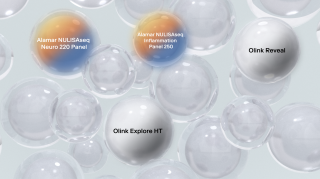
Proteomics has evolved into a central pillar of population health research. By capturing hundreds or even thousands of proteins in a single assay, proteomics helps to uncover molecular biomarkers from the earliest disease process to clinical endpoints. With several proteomics assays now available, each with unique advantages and limitations, researchers face the challenge of determining which panel fits their study design and funding resources.
Strategic approaches to proteomics
Modern proteomics strategies often fall into two broad categories. Some studies aim for large‑scale discovery work, where the goal is to measure thousands of proteins spanning nearly every physiological pathway. This is particularly valuable when working with multi-disease cohorts and when several research groups utilize the same dataset for different study questions.
Other studies focus more on specific disease areas. Here, the priority is sensitivity rather than breadth. Many proteins relevant to neurological or inflammatory diseases exist at very low concentrations in plasma, and ultra-sensitive assays are needed to measure them reliably. For these applications, smaller panels with highly optimized analytical performance can provide data that broader assays cannot detect. The two strategies are complemental and ideally researchers would opt for both, but constraints of research funding often make this prohibitively expensive.
Comparing the proteomics panels offered by Nightingale Health
Alamar Biosciences
Alamar NULISAseq Neuro 220 Panel
The brand new NULISA Neuro panel includes 220 proteins that capture all the key hallmarks of neurodegeneration. This panel stands out due to its exceptional ability to detect biomarkers such as brain-derived phosphorylated tau and other emerging biomarkers for Alzheimer’s disease. These biomarkers can identify individuals at elevated risk of dementia more than a decade before symptom onset. In head‑to‑head comparisons, the panel’s performance matches leading single plex assays, yet it offers broader neurological pathway coverage in a single measurement. For research on dementia, Parkinson’s disease, traumatic brain injury, multiple sclerosis, gliomas and as well brain aging, this panel is a must have because it provides the molecular resolution that broader proteomics panels cannot match.
Alamar NULISA Inflammation Panel 250
The NULISA Inflammation panel focuses on proteins central to immune activation and inflammatory disease processes. Many of these proteins, including several interleukins, appear in plasma at extremely low concentrations and are not possible to measure accurately by other proteomics assays. This makes the panel well suited for research on autoimmune diseases, cancers, and any disease with an inflammatory basis. Of particular relevance for profiling clinical trials, an absolute quantitation variant of the NULISA inflammation panel is also available.
Olink™
Olink™ technology
Olink provides researchers with a choice of discovery depth. Olink Reveal enables discovery at the scale of ~1,000 carefully selected proteins, optimized for immune and disease-relevant pathways, whereas Olink Explore HT expands coverage to more than 5,400 proteins for broader, proteome-wide discovery. This flexibility allows investigators to select the level of depth most appropriate to their research question. In addition, the Olink platform is highly scalable, offering a portfolio that includes targeted panels with absolute quantification capabilities. Assays are highly concordant across panels, facilitating smooth translation from discovery to clinical utility, using the same technology.
Olink™ Reveal
Olink Reveal provides a proteomic panel designed to understand the immunological complexity that drives much of human disease while also representing diverse biological pathways. This ensures broad applicability across research areas, from immune-mediated conditions to oncology, cardiovascular, neurological, and metabolic diseases. The panel was informed by population-scale data from the UK Biobank Pharma Proteomics Project, ensuring that proteins included are biologically relevant and statistically associated with future disease risk. By uniting comprehensive pathway coverage with robust disease-association evidence and a streamlined OlinkTM Proximity Extension AssayTM technology–NGS workflow, Olink Reveal empowers researchers to investigate immune complexity and broader disease biology at scale. This positions the panel as a versatile tool for exploratory studies, biomarker discovery, and the prioritization of therapeutic targets across nearly all research areas.
Olink™ Explore HT
Olink Explore HT represents a groundbreaking advancement in proteomics, offering an unparalleled combination of a meticulously designed protein library, exceptional specificity and precision, unmatched scalability, and high throughput capacity. It empowers scientists to discover biology with confidence, uncovering critical insights into complex diseases, accelerating biomarker discovery, and advancing precision medicine research at an unprecedented scale. It sets a new standard for high-resolution protein analysis, driving transformative progress in life science research
The library of approximately 5,400 protein assays enables deeper and broader proteome analysis than ever before. It was carefully designed to provide more comprehensive and actionable biological insights, drawing from various criteria such as annotations, publications, clinical trials, drug targets, and requests from the research community. As a result, the Olink Explore HT library provides more extensive coverage of key biomarker categories and biological pathways
- Low-abundant immune system-related proteins linked to a wide range of human diseases.
- Proteins actively secreted into the blood, highly relevant for clinical diagnostics and precision medicine.
- Tissue-elevated proteins that may be released into the blood due to cell death or tissue damage.
- Approved and candidate drug targets.
The library covers an impressive 85% of all 2,931 human biological pathways in the Reactome database (Reactome Database V.91), including 100% of the top-level biological pathways (level 0) and an excellent representation of lower-level pathways. This extensive pathway coverage allows researchers to explore biological processes with both breadth and depth.
Nightingale Health’s NMR-based metabolomics
Metabolomics is a cost-effective complement to any proteomics assay. The Nightingale NMR platform measures a wide set of metabolic biomarkers that capture systemic physiology and overall metabolic health. Combining metabolomics with proteomics provides a rich foundation for examining molecular mechanisms underlying multimorbidity, aging, lifestyle exposures, and vascular health. This integration allows researchers to examine how vascular processes interact with inflammation and neurodegeneration across the life course.
Which panel should you choose?
- Alamar NULISAseq Neuro 220 Panel is the optimal choice for brain health research due to its proven high sensitivity for the most important biomarkers.
- Alamar NULISAseq Inflammation Panel 250 is ideal for studies of disease with an inflammatory component.
- Olink Reveal provides broad yet cost-efficient protein coverage.
- Olink Explore HT is ideal for broad, agnostic discovery and multi-disease research.
- Combining proteomics with NMR metabolomics delivers the deepest mechanistic understanding and is especially useful in vascular and neurological research.
Want to know more?
The Nightingale Health team is happy to discuss your research aims and which panel best suits your study design. Reach us at research@nightingalehealth.com.
Read more and find biomarker list for each panel on our proteomics webpage.
To get a quote for our analysis services submit a quotation request form.